Is IVF Hard on the Body? Understanding Hormones, Risks & Recovery
For many people, the biggest hesitation around IVF is not money, success rates, or even needles.
It is a quieter fear, one that often goes unspoken:
What if my body cannot handle this? What if IVF is too hard on me physically?
If you are asking whether is IVF hard on the body, you are not being negative or dramatic. You are being realistic. IVF asks the body to cooperate with hormones, procedures, and timelines that are unfamiliar. Wanting to understand how your body will respond is not fear. It is self-awareness.
This blog is not meant to convince you to do IVF. It is meant to help you understand what actually happens to your body during IVF, how IVF hormones work in the body, what side effects are common, what recovery looks like, and how doctors decide whether is IVF suitable for me in the first place.
The Reality Behind the Doubts About IVF Risks and Complications
Most people considering IVF are not starting from zero. They have already been through months or years of trying, testing, waiting, and adjusting their lives around hope. By the time IVF enters the picture, the body often already feels tired.
So when someone says, “I’m worried IVF will be too much for my body,” what they usually mean is: My body has already been through a lot. I don’t want to harm my long-term health. I don’t know how strong or fragile my system really is.
Many patients directly ask during consultations whether is IVF hard on the body, especially when they already feel physically exhausted from prolonged attempts, hormonal imbalance, or emotional stress.
These concerns are valid. And the answer is not the same for everyone.

How IVF Hormones Work in the Body
To understand whether IVF is physically hard, it helps to understand how IVF hormones work in the body.
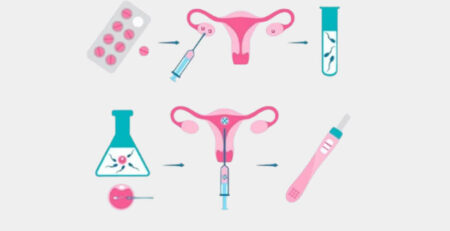
In a natural cycle, the body usually matures one egg. IVF uses hormones to gently encourage the ovaries to mature more than one egg in the same cycle. This is called ovarian stimulation.
The hormones used in IVF are not foreign chemicals. They are synthetic or purified versions of hormones your body already produces, such as FSH and LH. The difference is in the dose and timing, not the hormone itself.
These hormones temporarily signal the ovaries to work harder for a short period. Once the cycle ends, hormone levels gradually return to baseline.
For most people, this process is temporary, not permanent. The effects of IVF hormones on the body are carefully monitored so the physical stress on the body does not cross safe limits.
Getting pregnant is now easier
Book IVF Consultation
What Happens to Your Body During IVF, Step by Step
One reason IVF feels intimidating is that people imagine everything happening at once. In reality, the body goes through IVF in phases.
During stimulation, some women feel a sense of fullness or heaviness in the lower abdomen, mild bloating, breast tenderness, or fatigue. These sensations occur because the ovaries are responding to stimulation and increasing in size.
These IVF body changes are expected and monitored carefully through scans and blood tests to ensure ovarian stimulation side effects remain within safe ranges.
After egg retrieval, the body enters a recovery phase. Hormone levels shift again, and some people feel emotional sensitivity or physical tiredness. This phase is often short-lived.
Understanding what happens to your body during IVF helps reduce fear. The body is not being pushed endlessly. It is responding to a controlled, time-limited medical process.
The Common and Temporary Irregularities Patients May Feel During IVF Cycles
- Stimulation may cause mild bloating and heaviness
- Breast tenderness and fatigue are common
- Ovaries temporarily increase in size
- Doctors monitor with scans and blood tests
- Recovery begins after egg retrieval
- Hormone shifts can affect mood briefly
- The process is controlled and time-limited
All of these are temporary and will settle over time.
Common IVF Side Effects and Recovery
When people search for IVF hormone side effects, they often worry about worst-case scenarios. In reality, most side effects are mild and temporary.
Common IVF side effects include bloating, mood swings, headaches, mild nausea, and injection site discomfort. These usually settle within days to weeks after the cycle.
Recovery after IVF treatment depends on how your body responds and whether pregnancy occurs. For many, physical recovery happens within one or two menstrual cycles.
Some patients worry again at this stage and ask whether is IVF hard on the body even after treatment ends. In most cases, once hormones settle, the body returns to its usual rhythm.
The emotional recovery can take longer, especially if outcomes are uncertain. That emotional aspect is real, but it is not the same as physical harm.
Is IVF Physically Safe in the Long Term?
This is one of the most important questions. From decades of global research, IVF is considered medically safe when properly prescribed and monitored. Large studies have not shown increased long-term risks of cancer or chronic illness directly caused by IVF hormones.
Most concerns around safety arise when hormones are overused, cycles are repeated without reassessment, or monitoring is inadequate.
This is why the medical safety of IVF treatment depends heavily on who is guiding it. IVF is safest when the goal is not “maximum eggs,” but a healthy, balanced response.
When IVF May Feel Harder on the Body
IVF can feel physically harder in certain situations, such as very high ovarian response, underlying hormonal disorders like PCOS, severe anxiety, or poor nutritional status before starting treatment.
In these cases, doctors often modify protocols, slow things down, or sometimes recommend postponing treatment.
A good fertility specialist does not push the body beyond what it can handle. They adapt treatment to the body, not the other way around. This is why an IVF consultation before treatment plays a crucial role in protecting both physical and emotional health.
Is IVF Suitable for Me?
This question matters more than IVF success rates.
Is IVF suitable for me depends on age, ovarian reserve, hormonal balance, general health, emotional readiness, and previous treatment response.
IVF is not automatically the right answer for everyone at every stage. Sometimes observation, lifestyle changes, or simpler treatments are better first steps.
A thoughtful IVF consultation before treatment helps determine whether IVF fits your body and life, rather than forcing a decision based on fear or urgency.
The Difference Between Physical Stress and Harm
It’s important to separate two ideas that often get mixed up.
IVF can cause physical stress.
That does not mean it causes physical harm.
Stress means the body is responding to something new. Harm means lasting damage. For most people, IVF causes temporary physical stress on the body, not permanent harm.
The body is resilient. But it also deserves respect. That balance is what good fertility care aims to maintain.
Recovery After IVF Is Not Just Physical
Even when the body recovers quickly, the mind may take longer.
Some people feel relief after a cycle. Others feel emotionally drained. Neither response means IVF was “too much.” It means the experience mattered.
Acknowledging recovery as both physical and emotional helps people approach IVF with more kindness toward themselves.
Choosing IVF With Awareness, Not Fear
Asking whether is IVF hard on the body is not a reason to avoid it. It is a reason to approach it thoughtfully.
When IVF is chosen with proper evaluation, realistic expectations, and medical supervision, most bodies handle it well. Fear reduces when information increases.
A Calm, Informed Way Forward
If IVF is on your mind, the next step is not deciding immediately. It is understanding.
At Excel IVF, Dr Rhythm Gupta deeply evaluates whether IVF fits your body and whether IVF is possible given your mental and physical condition. IVF consultations with Dr Gupta before treatment are centred on explaining options, risks, and recovery honestly, so decisions are made with clarity rather than pressure.
Whether IVF is suitable now, later, or not at all, understanding how your body may respond helps you move forward with confidence, not fear.
FAQs About IVF Risks and Complications
No. Most people tolerate IVF well physically. The experience varies based on age, hormone response, and overall health.
Physical recovery usually takes a few weeks. Emotional recovery may take longer and varies by individual.
Current research shows no proven long-term health damage when IVF hormones are used responsibly and monitored.
Doctors adjust doses or pause treatment if the response is too strong. Safety comes before continuation.
For many people, emotional uncertainty is harder than physical symptoms. Support and counselling help manage this.
Yes. IVF is always a choice. You can pause or stop treatment at any stage.
No. Physical strength does not determine IVF success. Medical response and egg quality matter more.

Dr. Rhythm Gupta
Consultant Obstetrician,
Gynaecologist & Infertility Specialist,
MBBS, M.S Obstetrics & Gynaecology
At Excel IVF, we don’t just treat tests and parameters. We partner with you through the emotional, scientific, and medical journey of fertility. Here, Dr. Rhythm Gupta, the leading IVF specialist in Delhi, shares insights from her years in reproductive medicine, breaking down myths, best practices, and what matters most in your path to becoming a parent.
Book a consultation today to understand better and begin your parenthood journey. Call: +91-8920963596 or Email Us: [email protected]