PCOS and Getting Pregnant: Your Real Chances and What Helps
Written by Dr. Susheela Gupta and medically reviewed by Dr Rhythm Gupta, MBBS, MS (Obstetrics & Gynaecology), Fellowship in Clinical ART, Consultant & Fertility Specialist, Excel IVF, Delhi.
Yes, most women with PCOS can get pregnant. In clinical practice and in randomised trials, the great majority of women with PCOS who want a baby go on to have one, often with relatively simple help. The path is rarely a straight line, and what works depends on which features of PCOS you actually have, but it is one of the more solvable causes of fertility difficulty.
This is a longer guide than usual, because PCOS is not a single problem. Two women with the same diagnosis can have very different fertility journeys depending on their weight, insulin resistance, age, and how their ovaries respond to medication. The aim here is to take you through what we actually know, what the published numbers say, and what we would typically do at each step. Plain English throughout, but with real detail.
What PCOS Is Actually Doing to Your Fertility?
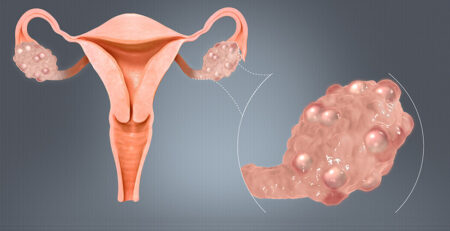
PCOS is a hormonal condition, not a disease of the ovaries failing. Three things tend to go wrong together, in different proportions in different women. There is usually some degree of insulin resistance, meaning the body produces more insulin to do the same job. The higher insulin pushes the ovaries to produce more androgens (male-pattern hormones, including testosterone), and the higher androgens disrupt the normal monthly hormonal signal that should mature and release an egg.
The downstream effect on fertility is anovulation, meaning eggs are not released, or oligo-ovulation, meaning they are released only occasionally. You cannot conceive in a cycle where no egg is available, which is why women with PCOS often go months between real chances rather than getting one chance every month. PCOS is the single most common cause of anovulatory infertility worldwide, and in a large national study by the Indian Council of Medical Research it affects around 19.6% of Indian women of reproductive age (by Rotterdam criteria), substantially higher than the 6 to 13% reported in most international populations.
Three things matter to know early. First, PCOS does not mean your eggs are bad. Most women with PCOS have a normal or above-normal ovarian reserve. The problem is the egg coming out, not the egg quality. Second, PCOS is highly heterogeneous, and treatment that works brilliantly for one phenotype may not be the right answer for another. Third, this is treatable. With the right combination of lifestyle, the right medication and proper follicle monitoring, ovulation rates approach those of women without PCOS in most patients treated at an IVF centre in Delhi.
Your Real Chances, in Numbers
Honest numbers are useful here, because vague reassurance helps no one. What follows are figures from large clinical studies, not promises about any individual.
In the landmark PPCOS-II randomised trial of 750 women with PCOS, the live birth rate over five treatment cycles was 27.5% with letrozole compared with 19.1% with clomiphene citrate, with cumulative ovulation rat,es of 61.7% and 48.3% respectively. An Indian randomised study of 384 women showed an even larger gap, with 36.5% live births on letrozole versus 22.4% on clomiphene. These are five-cycle cumulative figures, meaning roughly one in three to one in four women conceived and delivered within a treatment course of around six months.
Weight matters, particularly for women in the overweight or obese range. The evidence consistently shows that losing 5 to 10% of body weight can restore spontaneous ovulation in many women with PCOS without any medication at all. This is not a small effect; it is one of the strongest interventions we have for the right patient.
Around 15 to 25% of women do not respond to clomiphene (“clomiphene resistance”), and were one of the main reasons letrozole was studied as an alternative. Letrozole also produces a thicker endometrial lining (around 8.7 mm versus 7.5 mm on clomiphene in head-to-head studies), which matters because adequate lining thickness supports implantation.
None of this is a guarantee. Age remains the strongest single predictor of success, and PCOS does not protect against the age-related decline in egg quality. A woman of 28 with PCOS responds very differently to the same treatment than a woman of 40 with PCOS, which is why the earlier we start an appropriate plan, the better.
A typical patient profile (composite of common presentations, not a specific patient)
| Composite Patient: Priya, Early 30s, Trying to Conceive for 18 Months | |
| Presenting picture | Married 4 years, actively trying for 18 months. Periods every 45 to 70 days since her teens. BMI 28. Mild acne and some unwanted hair growth. Generally healthy. No yprior pregnancies. Husband’s semen analysis normal. |
| Initial assessment | Trans-vaginal ultrasound showed polycystic-appearing ovaries on both sides with 18 small follicles each, consistent with PCOS morphology. Hormonal profile: raised LH/FSH ratio, free testosterone in the upper-normal range, AMH 6.8 ng/mL (elevated, as is typical in PCOS). Fasting insulin and HbA1c suggested mild insulin resistance. Tubal patency confirmed. |
| Treatment plan | A staged approach over 6 months. Step 1: structured lifestyle programme targeting 5 to 7% weight loss, with a lower-glycaemic eating pattern, 150 minutes of moderate exercise per week, and metformin 500 mg twice daily for the insulin resistance. Step 2 (after 8 to 10 weeks): ovulation induction with letrozole 2.5 mg on cycle days 3 to 7, with follicle monitoring by ultrasound from day 10 and timed intercourse around ovulation. |
| What we would expect to see | With this profile, the published data and clinical experience suggest a meaningful chance of conception within 3 to 6 ovulation-induction cycles. If she does not conceive in the first cycle but ovulates well on letrozole 2.5 mg, we continue at the same dose. If she does not ovulate, the dose is escalated to 5 mg, then 7.5 mg, before considering injectable gonadotropins or moving to IUI/IVF. |
| Key learning for any reader | A typical PCOS plan is not one prescription, it is a sequenced approach: assessment first, lifestyle and insulin sensitisation in parallel, then ovulation induction with monitoring, with clear stopping points so we never repeat what is not working. Most women conceive somewhere along this pathway, well before IVF becomes necessary. |
Note: The patient profile above is a composite drawn from common presentations in our clinic and from published PCOS cohorts. It is not a specific patient, and any individual’s plan will differ based on her own findings.

Getting pregnant is now easier
Book IVF Consultation
How We Actually Approach Treatment, Step by Step
Step 1: Assessment of Both Partners
Before treating PCOS, we confirm it is the main issue. A thorough first assessment includes a pelvic ultrasound (looking for polycystic-appearing ovaries: 20 or more follicles per ovary or ovarian volume above 10 cm³ by current criteria), hormonal profile (LH, FSH, prolactin, TSH, free testosterone, DHEAS), AMH, fasting glucose and insulin, lipid profile, and a tubal patency check. The male partner should always have a semen analysis at this stage, since up to 30% of fertility difficulty has a male component and treating the female partner alone in that case wastes time.
Step 2: Lifestyle and Insulin Sensitisation
If BMI is above 25, lifestyle is the foundation. The target is 5 to 10% weight loss over 3 to 6 months, achieved through a lower-glycaemic dietary pattern (reducing refined carbohydrates, increasing protein and fibre), 150 to 200 minutes of moderate-intensity exercise weekly with two resistance sessions, and adequate sleep. This is not about thinness; it is about insulin sensitivity. Even a modest weight loss restores spontaneous ovulation in many women.
Metformin (typically 500 mg twice daily, building up to 1500 to 2000 mg/day as tolerated) is added in women with documented insulin resistance, impaired glucose tolerance, or BMI over 30. It is not a fertility drug per se, but it improves insulin sensitivity, helps modest weight loss, and can restore ovulation in a subset of patients. Around 68% of women on 1500 mg daily achieve 5 to 10% weight loss in real-world cohorts. Side effects are mostly gastrointestinal and reduce with extended-release formulations and gradual dose increase.
Step 3: Ovulation Induction with Letrozole
If ovulation does not return with lifestyle alone, the next step is ovulation induction with tablets. The current first-line agent, based on multiple randomised trials and now recommended by the International PCOS Network, ASRM and ESHRE guidelines, is letrozole, not clomiphene.
The standard protocol is letrozole 2.5 mg orally on cycle days 3 to 7, followed by transvaginal ultrasound from day 10 onwards to track follicle growth, and a timed trigger (usually with hCG) when the leading follicle reaches around 18 mm. Couples are advised to time intercourse 36 to 48 hours after the trigger. We confirm ovulation with a mid-luteal progesterone. If the cycle does not result in pregnancy but ovulation occurred, we typically continue at 2.5 mg for up to 3 to 4 cycles before escalating. If ovulation did not occur, the dose is escalated stepwise to 5 mg, then 7.5 mg.
Why letrozole over clomiphene: better live birth rates (27.5% vs 19.1% in PPCOS-II), better monofollicular development (lower twin risk), better endometrial thickness, and lower clomiphene-resistance issues. Clomiphene is still useful in some cases but is no longer the default.
Step 4: When Letrozole Alone Is Not Enough
If 3 to 4 cycles of letrozole with timed intercourse do not produce a pregnancy in an ovulating woman, options include adding metformin (if not already on it), switching to or adding low-dose gonadotropin injections under closer monitoring, or moving to intrauterine insemination (IUI) with stimulated cycles. IUI typically gives a 10 to 15% pregnancy rate per cycle in PCOS with otherwise good parameters; we usually offer 3 to 4 IUI cycles before considering IVF.
Step 5: IVF and ICSI
IVF is rarely the first answer for PCOS. It is held in reserve for women who have not conceived after a complete course of simpler treatments, or who have additional factors such as significantly low AMH (uncommon in PCOS but possible), blocked tubes, or moderate-to-severe male factor. PCOS ovaries generally respond well to IVF (often producing many eggs), but they carry a higher risk of ovarian hyperstimulation syndrome (OHSS). This is why we use lower starting doses of stimulation, antagonist protocols, and often a freeze-all strategy with elective frozen embryo transfer in a subsequent natural or programmed cycle, all of which reduce OHSS risk significantly.
Frequently Asked Questions About PCOS and Getting Pregnant
Yes. Many women with PCOS conceive naturally, particularly once ovulation becomes regular. The strongest natural-conception lever for an overweight patient is a 5 to 10% weight loss, which restores spontaneous ovulation in a meaningful proportion. Lean women with PCOS often need medication earlier, but even there, lifestyle and insulin sensitisation set the foundation.
No. PCOS is a common cause of difficulty conceiving, not a guarantee of infertility. Around 70 to 80% of women with PCOS who want to have children eventually do, often with relatively simple medical help.
It depends on the step. Lifestyle restoration of ovulation alone helps a significant subgroup. Letrozole-based ovulation induction shows around 27% live birth over five cycles in randomised data (PPCOS-II), and Indian studies have shown rates up to 36%. Adding IUI brings cumulative rates higher again, and IVF, when needed, is highly effective in PCOS with appropriate OHSS-prevention protocols.
Current evidence suggests that letrozole is at least as safe and more effective. There were initial concerns about birth defects with letrozole that have not been borne out in subsequent large studies; major reproductive societies (ASRM, ESHRE, International PCOS Network) now recommend letrozole as first-line for ovulation induction in PCOS.
Not at all, but they are a sign that ovulation is irregular, which is the thing to address. Irregular periods and fertility are closely linked in PCOS, and regulating ovulation is usually the key to conceiving.
Most women with PCOS have a high AMH, often above 4.5 ng/mL, because of the large number of small follicles. But occasionally PCOS and low ovarian reserve coexist, especially in women in their late 30s or with prior ovarian surgery. That combination changes the treatment urgency, which we explain in our guide on low AMH and pregnancy chances.
Take the Next Step
PCOS is one of the more solvable causes of fertility difficulty, but only when treatment is built around your specific phenotype: your weight, your insulin resistance, your ovarian response, your age and your partner’s parameters. There is no single “PCOS protocol” that fits everyone, which is why the proper assessment matters more than which medication you eventually take.
If you have PCOS and want a clear, personalised plan, book a consultation with Dr Rhythm Gupta at Excel IVF. We will assess both partners, identify the right next step, and explain realistic timelines, including the steps that are usually enough before IVF becomes part of the conversation.

Dr. Rhythm Gupta
Consultant Obstetrician,
Gynaecologist & Infertility Specialist,
MBBS, M.S Obstetrics & Gynaecology
At Excel IVF, we don’t just treat tests and parameters. We partner with you through the emotional, scientific, and medical journey of fertility. Here, Dr. Rhythm Gupta, the leading IVF specialist in Delhi, shares insights from her years in reproductive medicine, breaking down myths, best practices, and what matters most in your path to becoming a parent.
Book a consultation today to understand better and begin your parenthood journey. Call: +91-8920963596 or Email Us: excelivf@gmail.com
Note: This article is for general information and is not a substitute for personalised medical advice. All figures cited are from peer-reviewed clinical studies; outcomes for any individual depend on age, weight, ovarian reserve, partner factors and other variables. The patient profile described is a composite, not a specific patient. Please consult a fertility specialist about your situation.