Can You Get Pregnant with One Fallopian Tube?
By Dr Susheela Gupta and medically reviewed by Dr Rhythm Gupta, MBBS, MS (Obstetrics & Gynaecology), Fellowship in Clinical ART, Consultant & Fertility Specialist, Excel IVF, Delhi.
Yes, you can get pregnant with one fallopian tube, and the chances are far better than many women fear. Across published cohorts of women with one open tube, natural pregnancy rates of roughly 30 to 40% within two years are typical, compared with around 45 to 55% when both tubes are open. So one tube reduces the odds, but does not anywhere near halve them.
Why One Tube Is Often Enough?
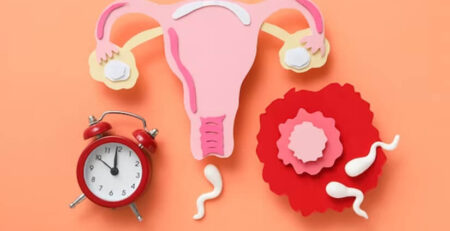
The fallopian tubes pick up eggs released from either ovary, not just the ovary on the same side. The tube’s fimbriated end can reach across to retrieve an egg from the opposite ovary in many cycles. This is why losing one tube does not halve fertility. It reduces it modestly, mainly because cycles where the egg is released from the side without a working tube are less productive.
What the Numbers Actually Show?
Figures from large published cohorts (with the usual caveat that any individual’s chances depend on age, the state of the remaining tube, and other factors):
- Both tubes patent: roughly 45 to 55% natural pregnancy within 2 years in women under 40 with no other significant factors.
- One tube patent, one blocked (no hydrosalpinx): roughly 30 to 40% within 2 years.
- One tube patent, contralateral hydrosalpinx: drops to around 15 to 25%. Fluid from the blocked side can interfere with implantation, which is why surgical removal of the affected tube is often recommended.
- After salpingectomy for ectopic pregnancy with a healthy remaining tube: roughly 55 to 65% achieve intrauterine pregnancy within 2 years, with recurrent ectopic risk around 5 to 8%.

What Affects Your Personal Chances?
Three things matter most:
- Your age. Natural conception rates are roughly 40 to 50% in women under 35 and fall to around 5 to 15% in women over 40 across all tubal patterns. Age is the single strongest predictor.
- Whether there is hydrosalpinx on the blocked side. If there is, surgical removal of the affected tube usually improves both natural and IVF outcomes.
- Ovulation from each side. Most women ovulate roughly alternately. Tracking ovulation can identify the productive cycles, particularly with ultrasound follicle monitoring.
If Conception Is Taking Longer
Standard advice is to seek assessment after 12 months of trying (6 months if over 35), and one-tube status is itself a reason not to wait the full year. The first workup confirms ovulation, checks the patent tube is functional, and rules out other factors. Treatment, where needed, often starts with ovulation induction with timed intercourse or IUI, with IVF held in reserve. The full picture is in our pillar guide on blocked fallopian tubes and pregnancy.
Getting pregnant is now easier
Book IVF Consultation
Frequently Asked Questions
Yes. The single patent tube can pick up eggs from either ovary, so conception remains possible in the majority of cycles. Natural pregnancy rates of roughly 30 to 40% within two years are documented in published cohorts.
Modestly. Compared with both tubes open (around 45 to 55% over two years), one open tube gives roughly 30 to 40%. The gap is smaller than many women fear, particularly under 35 and when the absent tube has been cleanly removed rather than left as a hydrosalpinx.
Yes. Both ovaries continue to release eggs, and the remaining tube can often pick up eggs released from the opposite side. This is one of the main reasons single-tube fertility outcomes are better than people expect.
If the remaining tube is healthy, roughly 55 to 65% of women achieve a subsequent intrauterine pregnancy within two years. Recurrent ectopic risk is around 8 to 10%, which is why early ultrasound in the next pregnancy is important.
Only if it is causing problems, particularly if it is a hydrosalpinx, which can leak fluid into the uterus and reduce both natural and IVF success. A simple blocked tube without fluid usually does not need removal.
Take the Next Step
Having one fallopian tube does not put pregnancy out of reach for most women. The right next step depends on your age, the state of the remaining tube, and what (if anything) is on the blocked side. Book a consultation with Dr Rhythm Gupta at Excel IVF for a clear assessment of your specific situation.
Sources
Figures and ranges in this guide are drawn from the following peer-reviewed sources. Ranges are wider than any single study because real-world outcomes vary by age, study population, and definitions of pregnancy used.
Natural pregnancy by tubal pattern: Retrospective cohort of 2,160 patients undergoing HSG (PMC12721197, 2024-2025), reporting 51.1% with bilateral patency, 36.7% with unilateral occlusion, 20.8% with unilateral hydrosalpinx within 2 years. Age-stratified outcomes: 46.8% under 35, 10.2% over 40.
Pregnancy after salpingectomy for ectopic: The DEMETER randomised trial (2-year intrauterine pregnancy rates 67% after methotrexate, 71% after salpingostomy, 64% after salpingectomy); ScienceDirect 2006 cohort (PMID 9588606): 70.4% spontaneous conception after laparoscopic salpingectomy, 50% live birth, 10.6% recurrent ectopic, with 82.1% intrauterine pregnancy in women under 30 with a normal contralateral tube; PMC8907964 review (55.5% intrauterine pregnancy within 24 months after salpingectomy in 618-patient cohort).
Hydrosalpinx effects on contralateral conception: Meta-analyses by Volodarsky-Perel et al. 2019 (PMID 31324437) and Cochrane review (Johnson et al. 2010) showing salpingectomy of an affected tube improves outcomes from the remaining patent side.
Important caveats: Reported success rates vary by study population, age, surgical expertise, and definitions of pregnancy. Your individual chances may sit above or below these ranges, which is why a personalised clinical assessment matters more than any single statistic.

Dr. Rhythm Gupta
Consultant Obstetrician,
Gynaecologist & Infertility Specialist,
MBBS, M.S Obstetrics & Gynaecology
At Excel IVF, we don’t just treat tests and parameters. We partner with you through the emotional, scientific, and medical journey of fertility. Here, Dr. Rhythm Gupta, the leading IVF specialist in Delhi, shares insights from her years in reproductive medicine, breaking down myths, best practices, and what matters most in your path to becoming a parent.
Book a consultation today to understand better and begin your parenthood journey. Call: +91-8920963596 or Email Us: excelivf@gmail.com