
Can Adenomyosis Cause Infertility?
Understanding Symptoms Like Enlarged Uterus, Painful Sex, and What Treatment Offers
By Dr Rhythm Gupta (MBBS, MS Obstetrics & Gynaecology, Fellowship in Clinical ART) | Excel IVF, Shalimar Bagh East, Delhi
What Is Adenomyosis?
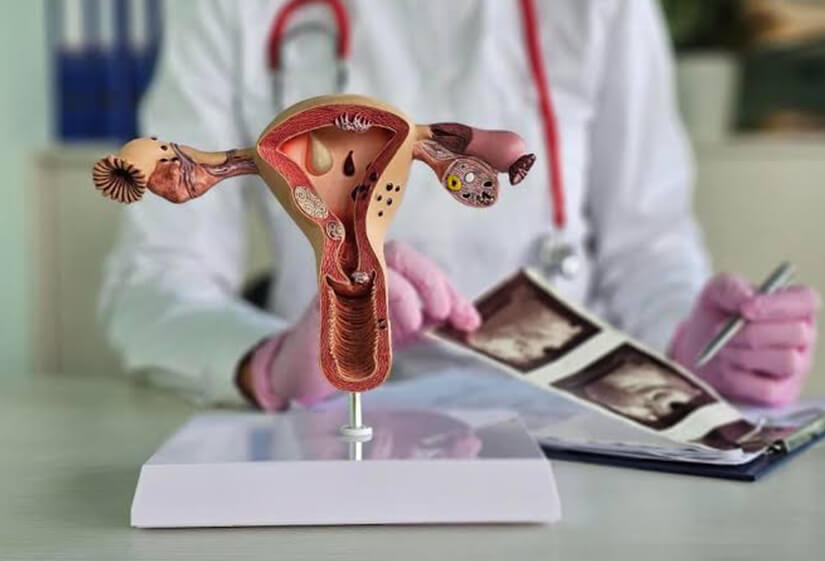
Understanding Adenomyosis Infertility starts with understanding the condition itself. Adenomyosis is a condition where tissue similar to the uterine lining (endometrium) grows into the muscular wall of the uterus. Unlike endometriosis, where this tissue grows outside the uterus, adenomyosis stays contained within the uterine wall itself. This causes the uterus to enlarge and often causes heavy, painful periods.
Adenomyosis is real and often under-diagnosed. Historically, it was only diagnosed after hysterectomy when the tissue could be examined directly. Today, non-invasive imaging (transvaginal ultrasound and MRI) can identify it accurately, which means women in their 30s and 40s are getting proper diagnosis earlier. Around one-third of women with adenomyosis have no symptoms and only discover it during a fertility workup.
Symptoms and How Adenomyosis Differs From Endometriosis
Adenomyosis symptoms are often mistaken for other conditions or dismissed as “just bad periods”. The main signs include heavy prolonged periods, severe menstrual cramps, pelvic pressure, painful sex (medically called dyspareunia), and chronic pelvic pain. Some women also experience bloating.
Enlarged Uterus as a Physical Sign
A key physical sign is an enlarged uterus. Your gynaecologist may feel a symmetrically enlarged, soft, and tender uterus on examination. An enlarged uterus finding on ultrasound is often the first objective clue that prompts an adenomyosis workup. Uterine size that grows over time without pregnancy deserves investigation.
Anemia Risk From Heavy Bleeding
Heavy prolonged bleeding often leads to iron-deficiency anemia over time. Symptoms include fatigue, breathlessness during ordinary activity, and dizziness. If you have adenomyosis, checking for anaemia is worthwhile. Correcting iron levels also matters for pregnancy preparation.
Adenomyosis vs Endometriosis (and Endo-Adeno)
Endometriosis and adenomyosis are different conditions. Endometriosis is endometrial-like tissue outside the uterus (on ovaries, fallopian tubes, pelvic wall). Adenomyosis is inside the muscular wall of the uterus itself. Endometriosis more commonly causes pain outside periods; adenomyosis pain is more period-centred.
Sometimes both coexist. In patient communities, this co-occurrence is often called “endo-adeno”. When both are present, symptoms tend to be more intense, and treatment is more complex.
Focal vs Diffuse Adenomyosis
Focal adenomyosis (also called adenomyoma) is localised in one area of the uterine wall. Diffuse adenomyosis is spread throughout the wall. This distinction matters for treatment because focal disease is sometimes amenable to surgical excision while preserving fertility, whereas diffuse disease is usually managed medically.

Can Adenomyosis Cause Infertility?
Yes, evidence supports adenomyosis as a real factor in fertility difficulty and pregnancy complications. But the picture is nuanced, and adenomyosis infertility does not mean pregnancy is impossible.
What the Evidence Shows
A 2021 meta-analysis published in Reproductive BioMedicine Online, examining 17 studies, found that women with adenomyosis undergoing IVF had lower clinical pregnancy rates per cycle (odds ratio 0.69) and higher miscarriage rates (odds ratio 2.17). Higher rates of preterm birth, pre-eclampsia, and small-for-gestational-age babies were also observed.
Being honest about these numbers helps you make informed decisions about Adenomyosis Infertility care. And the same evidence base also shows that many women with adenomyosis do get pregnant, both naturally and through IVF, and go on to have healthy babies.
Why Adenomyosis Affects Fertility
Adenomyosis creates inflammation and altered uterine muscle patterns that can affect embryo implantation, uterine blood flow, coordination of uterine contractions, and the uterine cavity environment. Many women with mild adenomyosis conceive naturally, particularly at younger ages. Adenomyosis is a challenge to work with, not a verdict.
Getting pregnant is now easier
Book IVF Consultation
How Adenomyosis Is Diagnosed
Modern diagnosis of Adenomyosis Infertility relies on non-invasive imaging. Transvaginal ultrasound is the first-line test. An experienced sonographer can identify characteristic changes: enlarged uterus, asymmetric myometrial thickening, small cystic areas in the muscle wall, and altered texture patterns.
MRI is used when ultrasound is inconclusive or when detailed mapping is needed before treatment planning. MRI distinguishes focal from diffuse adenomyosis clearly and is particularly helpful before considering surgery. Physical examination adds important clinical information: a symmetrically enlarged, soft, tender uterus is a strong clue.
Definitive diagnosis historically required hysterectomy for histological confirmation. Modern imaging is now considered clinically sufficient. This is a real advance because women no longer need to lose their uterus to get an answer.
Adenomyosis Treatment Options if You Want to Conceive
Adenomyosis Infertility treatment depends on your fertility goals, symptom severity, and disease pattern (focal vs diffuse). Here are the main adenomyosis treatment options.
Medical Symptom Management (Not Compatible With Immediate Conception)
Hormonal therapies (combined oral contraceptives, progestogens, GnRH agonists) reduce symptoms and shrink adenomyosis lesions but prevent pregnancy while active. For women wanting to conceive, they are used in a “pause and prepare” approach: treatment for a defined period to reduce disease burden, followed by a treatment-free window for conception attempts.
IVF for Adenomyosis With GnRH Agonist Pretreatment
For adenomyosis, IVF with GnRH agonist pretreatment (also called an “ultra-long” protocol) has shown improved outcomes compared to standard IVF. The GnRH agonist is given for 2 to 3 months before the stimulation cycle to reduce inflammation and shrink adenomyotic tissue. Then IVF proceeds normally. This approach is well established at experienced fertility centres. If you are considering IVF for adenomyosis, ask about GnRH agonist pretreatment specifically. An experienced IVF centre in Delhi will tailor the protocol to your specific findings.
Surgery for Focal Adenomyosis (Adenomyomectomy)
For focal adenomyosis, adenomyomectomy (surgical removal of the focal lesion) can be considered, particularly when the lesion is well-defined and the woman wants to preserve fertility. This is more complex than fibroid removal because the boundaries of adenomyotic tissue are less clear, but for the right patient it is a real option.
Hysterectomy: Definitive but Not for Conception
Hysterectomy is the definitive cure for adenomyosis but removes the ability to carry a pregnancy. It is not an option for women planning conception. For women who have completed their family and have severe symptoms, it is often the most effective long-term treatment.
Pregnancy Outcomes and Monitoring
Once pregnancy is achieved, adenomyosis pregnancies benefit from closer obstetric monitoring. The main considerations are higher miscarriage risk (especially first trimester), higher preterm birth risk, higher pre-eclampsia risk, and small-for-gestational-age growth concerns.
These sound worrying, but honest interpretation matters: most Adenomyosis Infertility pregnancies do proceed to healthy live birth with good prenatal care. Regular growth scans, blood pressure monitoring, and coordination with an obstetrician experienced in complex pregnancies can substantially reduce these risks. If you become pregnant, share your adenomyosis diagnosis with your obstetrician early so monitoring plans can be adjusted. This is not a reason to panic. It is a reason to plan.
Quick FAQ on Adenomyosis and Fertility
Yes, many women with adenomyosis conceive naturally, particularly with mild or focal disease and at younger ages. Adenomyosis Infertility is associated with lower pregnancy rates and higher miscarriage rates on average, but many women do achieve healthy pregnancies. If you have been trying without success, seek fertility evaluation earlier rather than later.
An enlarged uterus on ultrasound can point to fibroids, adenomyosis, or various other conditions. It does not always cause fertility problems on its own, but the underlying cause matters. If enlarged uterus is found during a workup, further evaluation is worthwhile.
No. Painful sex can have many causes: endometriosis, fibroids, pelvic infection, cervical problems, vaginal dryness, or psychological factors. Persistent painful sex deserves investigation, whether or not adenomyosis is the underlying cause.
Yes, both conditions often coexist. When they do, symptoms are usually more intense, and treatment is more complex. This is why a proper diagnostic workup that considers both is important.
Next Steps
If you have been diagnosed with adenomyosis or suspect it based on your symptoms, a fertility consultation with Dr Rhythm Gupta at Excel IVF gives clarity on what it means for your specific situation. Age-banded guidance still applies: under 35, see a specialist after 12 months of trying; 35 to 37, after 6 months; 38 or older, do not wait beyond 3 months. Read the Female Infertility pillar for broader context, or the guide to fertility tests for women for what to expect at your workup.

Dr. Rhythm Gupta
Consultant Obstetrician,
Gynaecologist & Infertility Specialist,
MBBS, M.S Obstetrics & Gynaecology
At Excel IVF, we don’t just treat tests and parameters. We partner with you through the emotional, scientific, and medical journey of fertility. Here, Dr. Rhythm Gupta, the leading IVF specialist in Delhi, shares insights from her years in reproductive medicine, breaking down myths, best practices, and what matters most in your path to becoming a parent.
Book a consultation today to understand better and begin your parenthood journey. Call: +91-8920963596 or Email Us: [email protected]