
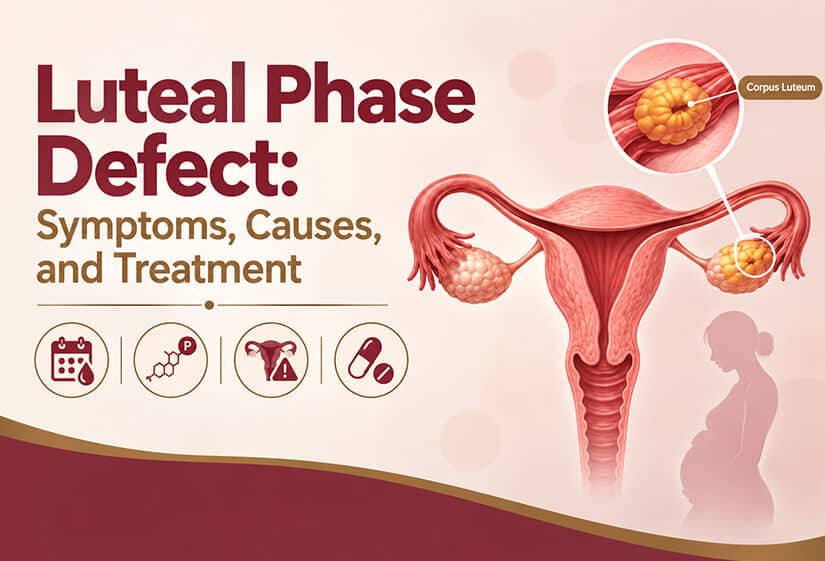
Luteal Phase Defect: Symptoms, Causes, and Treatment
What Is a Luteal Phase Defect?
The luteal phase is the second half of your menstrual cycle, the time between ovulation and your next period. It normally lasts 12 to 16 days. During this window, the corpus luteum in your ovary produces progesterone, which prepares the uterine lining for a possible pregnancy.
A Luteal Phase Defect (LPD) is when this second half is too short (usually under 10 days) or when progesterone is inadequate to support implantation. The uterine lining does not develop properly. If fertilisation happens, the embryo may fail to implant. If it does implant, the pregnancy may be lost very early. A short luteal phase can affect both natural conception and IVF outcomes.
What the Evidence Actually Says?
This is where honesty matters. The 2021 American Society for Reproductive Medicine (ASRM) committee opinion states that LPD has “not been proven to be an independent entity causing infertility or recurrent pregnancy loss.” Diagnostic criteria remain debated. There is no single gold-standard test for the condition.
What this does not mean: that progesterone does not matter. Progesterone is genuinely important for implantation and early pregnancy. What it does mean: LPD is a working clinical framework rather than a clean-cut diagnosis. In practice, many fertility specialists still identify and treat suspected LPD, particularly in the context of IVF where luteal phase support is standard of care.
The other term you will see is “Luteal Phase Dysfunction”, used interchangeably with LPD. Some clinicians also use “progesterone deficiency” as the underlying-cause label. All three describe overlapping clinical territory. Controversial does not mean irrelevant. It just means that treatment should follow findings and results, not a fixed label.
Symptoms and Signs to Watch For
Low progesterone symptoms are often subtle. Some women have none. Others notice a specific pattern:
- Short Cycles. Menstrual cycles consistently under 24 days. If you track your cycles, this pattern is easy to spot.
- Short Luteal Phase. A luteal phase of 10 days or less, measurable through cycle tracking or basal body temperature or by ovulation kit.
- Spotting Before Period. Brown or pink spotting starting 2 or more days before your actual period. Many women dismiss this as normal, but consistent spotting before a period is one of the more distinct low progesterone symptoms.
- Difficulty Conceiving Despite Ovulation. Regular cycles, positive ovulation kits, but no pregnancy. Cross-link to our guide on ovulating but not getting pregnant.
- Recurrent Very Early Losses. Chemical pregnancies or chemical miscarriage patterns. A positive test that becomes a period within days.
Getting pregnant is now easier
Book IVF Consultation
What Causes Progesterone Deficiency and Luteal Phase Defect?
Progesterone deficiency is usually a symptom of something else rather than a primary condition. Common underlying causes include:
- PCOS. Irregular ovulation often produces irregular or inadequate corpus luteum function.
- Thyroid Disorders. Both hypothyroidism and hyperthyroidism affect luteal function. Uncorrected thyroid dysfunction is a very common finding in women presenting with fertility difficulty and short luteal phases in India. Worth checking early.
- Hyperprolactinaemia. Elevated prolactin disrupts ovulation and luteal support.
Weight Extremes. Very low body weight, very high body weight, or rapid weight loss. - Over-Exercise or Chronic Stress. Both affect the hypothalamic signals that support ovulation.
- Perimenopause. Luteal function declines as ovarian reserve declines.
Breastfeeding. Temporarily suppresses normal cycling. - Some Medications. Certain antidepressants and opioids can affect hormonal balance.
Some cases have no identifiable cause. Treatment of the underlying cause is usually more effective than progesterone supplementation alone.

How Luteal Phase Defect Is Diagnosed and Treated
Diagnosis
There is no single gold-standard test. In practice, diagnosis combines several observations. Cycle length tracking over 3 or more cycles. Mid-luteal progesterone (measured about 7 days after suspected ovulation): a level above 10 ng/mL suggests adequate luteal function. Basal body temperature charting can reveal a short elevated-temperature phase, though it is imperfect. Endometrial biopsy was historically used but is no longer routine because reproducibility is poor. Ultrasound follicular tracking with attention to endometrial thickness is helpful in IVF settings.
Treatment
Treatment is layered.
- Treat the Underlying Cause. Correct thyroid function. Treat elevated prolactin. Address weight extremes and PCOS. This is usually more effective than progesterone alone.
- Progesterone Supplementation. Vaginal progesterone is typically preferred over oral for direct endometrial effect. Injectable progesterone is another option in specific IVF protocols. In IVF cycles, progesterone supplementation is standard of care and evidence-backed. In natural cycles, evidence is more mixed but many clinicians use it where indicated.
- Ovulation Induction. Clomiphene or letrozole to improve the follicular phase, which often improves downstream luteal function.
HCG Support. Occasionally used to support the corpus luteum in specific protocols. - Duration: if pregnancy is achieved, progesterone supplementation continues until roughly 8 to 12 weeks. Cost in India: vaginal progesterone is affordable, roughly 200 to 800 rupees per cycle. Injectable and IVF-specific protocols cost more.
Quick FAQ on Luteal Phase Defect and Progesterone Deficiency
They refer to the same clinical territory. Progesterone deficiency is the underlying hormonal cause. Luteal Phase Defect is the clinical presentation. Patients often use them interchangeably. Clinicians distinguish them slightly.
Evidence is mixed for naturally-conceiving cycles but strong for IVF luteal support. Vaginal progesterone works better than oral for direct endometrial effect. Ask your doctor whether it makes sense for your specific situation.
Mid-luteal progesterone above 10 ng/mL is typically taken as evidence of ovulation and adequate luteal function. Levels vary through the day and cycle to cycle, so a single low result is not always meaningful.
Some lifestyle factors support hormone balance: managing chronic stress, adequate healthy fats and B vitamins, healthy weight, treating any underlying thyroid or PCOS issue. But if your progesterone deficiency is significant, supplementation works reliably where lifestyle alone often does not.
Not always. Spotting can also be caused by polyps, fibroids, or hormonal fluctuations near ovulation. Consistent pre-period spotting for 2 or more days across several cycles deserves investigation, whether or not LPD turns out to be the cause.
When to See a Fertility Specialist
Age-banded guidance. If you are under 35 and have been trying to conceive for 12 months without success, or 35 to 37 and 6 months, see a specialist. If you are 38 or older, do not delay past 3 months of trying.
Additional flags specific to Luteal Phase Defect concerns: recurrent chemical pregnancies or very early miscarriages, consistent short luteal phase across cycles, spotting for 2 or more days before every period, or previously identified thyroid or prolactin issues.
A basic workup, including thyroid and prolactin panels alongside standard fertility tests, usually gives clarity within one or two cycles. Dr Rhythm Gupta, a fertility specialist in Delhi can guide the diagnostic workup and treatment plan. If LPD turns out to be part of your picture, it is treatable. If it turns out not to be, that is real information too.
Many women who suspect they have this issue go on to have healthy pregnancies. Even where LPD is diagnosed, treatment options are well established. This is not a life sentence. It is a working clinical framework that helps to direct the next step of your fertility journey.

Dr. Rhythm Gupta
Consultant Obstetrician,
Gynaecologist & Infertility Specialist,
MBBS, M.S Obstetrics & Gynaecology
At Excel IVF, we don’t just treat tests and parameters. We partner with you through the emotional, scientific, and medical journey of fertility. Here, Dr. Rhythm Gupta, the leading IVF specialist in Delhi, shares insights from her years in reproductive medicine, breaking down myths, best practices, and what matters most in your path to becoming a parent.
Book a consultation today to understand better and begin your parenthood journey. Call: +91-8920963596 or Email Us: excelivf@gmail.com