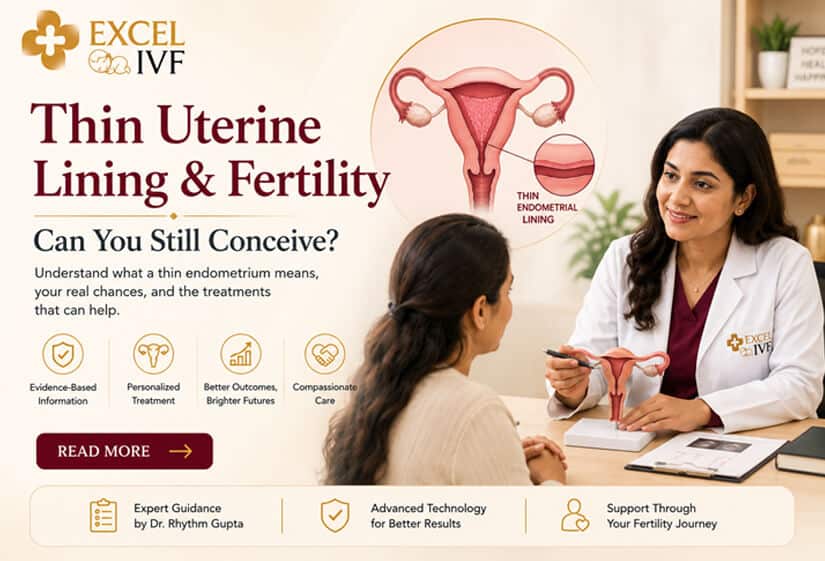
Thin Uterine Lining and Fertility: Can You Conceive?
Yes, you can get pregnant with a thin uterine lining, but the chances depend on how thin it is and what is causing it. The lining (endometrium) is where an embryo implants, and below a certain thickness, implantation becomes harder. Pregnancy is still possible at thinner readings, just with reduced odds, and many causes of thin lining are treatable.
What Counts as Thin?
Endometrial thickness is measured by transvaginal ultrasound. The optimal range for implantation is 8 to 14 mm measured on the day of the HCG trigger or before progesterone starts in a frozen-embryo cycle. Most fertility clinics use the following thresholds:
- Above 8 mm: considered adequate to good for embryo transfer or natural conception attempts.
- 7 to 8 mm: borderline; treatment may be discussed, but transfer is often still attempted.
- Below 7 mm: considered thin; pregnancy chances start to drop meaningfully, and clinicians may delay transfer or add treatment.
- Below 5 to 6 mm: very thin; transfer is often deferred unless other strategies (PRP, longer estradiol, hysteroscopic assessment) have been tried.
Thin endometrium is uncommon in routine IVF cycles, occurring in roughly 1 to 3% of stimulated cycles overall, but the rate rises with age and previous uterine procedures, reaching around 25% in women over 40 going through natural cycles.
Your Real Chances by Thickness
Published figures from a large IVF cohort of over 1,500 cycles show how pregnancy success tracks with lining thickness:
- Endometrium 6 mm or less: clinical pregnancy rate roughly 35 to 45%, live birth around 25 to 35%.
- Endometrium 7 to 9 mm: clinical pregnancy roughly 50 to 60%, live birth around 35 to 45%.
- Endometrium 8 to 14 mm: clinical pregnancy 60 to 70%, live birth 45 to 55%. This is the sweet spot.
The headline is that going from a very thin lining to an adequate one (6 mm to 8 mm and above) can meaningfully improve pregnancy rates, but above 8 to 10 mm the gains taper off. So the clinical aim is to reach the adequate zone, not to chase ever-thicker measurements.

Getting pregnant is now easier
Book IVF Consultation
Common Causes of Thin Uterine Lining
Thin lining is usually traceable to one of a few causes, and identifying which one applies determines the right treatment:
- Past Uterine P Repeated D&C (dilatation and curettage), hysteroscopic surgery, or caesarean section can damage the basal layer where new endometrium grows.
- Asherman’s S Scar tissue inside the uterine cavity, usually after surgery or infection. Prevalence around 1.5% generally, higher after repeated D&C.
- Chronic E Long-standing low-grade infection that disrupts lining regeneration. Often missed without specific biopsy testing.
- Clomiphene E Clomiphene can thin the lining as a side-effect of its anti-estrogenic action. This is one reason letrozole has become the preferred first-line ovulation-induction drug in most cases.
- Poor uterine blood flow or low estrogen response. Some women simply do not build adequate lining even with normal estrogen levels, which is harder to treat.
- Past pelvic infection or genital tuberculosis. Particularly relevant in Indian settings; can cause permanent endometrial damage.
What Actually Works?
Treatment depends on the cause, and honestly some options have stronger evidence than others:
Estradiol Supplementation is the mainstay. Oral, vaginal or transdermal estradiol given over a longer cycle improves lining thickness in many women. Vaginal estradiol produces meaningfully higher local endometrial concentrations than oral.
Hysteroscopic Adhesiolysis is the treatment for Asherman’s syndrome. When done well, it restores cavity anatomy and allows the lining to regenerate, with the right post-operative oestrogen support.
Treating Chronic Endometritis with a course of antibiotics, when diagnosed on biopsy, can resolve the underlying problem and allow normal lining to return.
Sildenafil Citrate, low-dose aspirin, and pentoxifylline-tocopherol combinations have been studied to improve uterine blood flow and lining thickness. Evidence is mixed, with some randomised studies showing benefit and others not. Used selectively rather than routinely.
Newer Regenerative Therapies (platelet-rich plasma, growth factors, stem cells) show early promise for refractory thin lining, but are still largely experimental and not standard care.
Thin Lining and Ovarian Reserve
Thin lining and low AMH often appear together, particularly in women over 35 or after multiple IVF cycles, because both reflect a degree of reproductive ageing or prior procedures. Each is treated on its own, but the combination shifts the urgency of the overall plan, particularly around when to consider donor egg or other escalation.
Frequently Asked Questions
A thin endometrial lining is generally defined as below 7 mm on transvaginal ultrasound around the time of ovulation or before embryo transfer. The optimal range for pregnancy is 8 to 14 mm. Thinner than 7 mm reduces implantation chances; below 5 to 6 mm makes natural conception or embryo transfer significantly less likely without treatment.
Often yes. Estradiol supplementation is the most evidence-supported first step. If the cause is Asherman’s syndrome, hysteroscopic adhesiolysis can restore the lining. Chronic endometritis responds to targeted antibiotics. Sildenafil, low-dose aspirin and emerging regenerative therapies (PRP, stem cells) are options in selected cases.
Most clinics aim for at least 7 to 8 mm before embryo transfer, with 8 to 14 mm considered optimal. Pregnancy can still occur below 7 mm, just at lower rates. Above about 10 to 12 mm, additional thickness gives diminishing returns; the goal is reaching the adequate zone, not maximising thickness.
Yes, it is possible, but the chances are lower than at 8 mm or above. Published data suggest clinical pregnancy rates of roughly 45 to 55% at 6 mm or below, compared with 70 to 80% at 10 to 14 mm. If you have a 6 mm lining, your clinician will likely discuss whether to attempt transfer or to add treatment first.
Clomiphene can thin the endometrium as a side-effect, because of its anti-estrogenic action at the uterus. This is one of the main reasons letrozole has become the preferred first-line ovulation-induction agent for most women, particularly those with PCOS, where it produces thicker linings on average.
Take the Next Step
Thin lining is one of the more treatable factors in fertility, especially when the cause is identified clearly. Treatment depends on what is causing it, which is why a proper workup, often including hysteroscopy if past procedures are part of the history, makes a real difference. Book a consultation at an experienced IVF centre in Delhi with Dr Rhythm Gupta at Excel IVF for a clear assessment and a plan suited to your specific situation.
Sources
Figures and ranges in this guide are drawn from peer-reviewed studies and consensus clinical practice. Where ranges are wider than any single study, this reflects variation across populations, study designs, and the definitions of thickness and pregnancy used.
Definitions and prevalence: Bu and Sun 2015; Wu et al. 2014; AlGhamdi et al. 2008 (thin endometrium incidence 1-2.5% in IVF cycles overall, rising to ~25% in older women undergoing natural cycles). Frontiers in Endocrinology 2024 review on new advances in thin endometrium treatment.
Causes: PMC8796444 (cell-based therapy review, Stem Cell Research & Therapy 2022): Asherman syndrome incidence ~1.5%, clomiphene as a known thinning agent. MDPI 2023 update on experimental therapeutics for thin endometrium (PRP, stem cells, exosomes). Chronic endometritis prevalence varies (10-30% in subfertile women in some series).
Treatments: Sildenafil and oral/vaginal estradiol RCTs (Fertility & Sterility 2002 randomised crossover study; multiple subsequent RCTs with mixed results). Cochrane and systematic reviews on adjuvant therapies for thin endometrium consistently show heterogeneous results. Stem-cell and PRP studies remain pilot-level evidence (PMC8296628, 2021).

Dr. Rhythm Gupta
Consultant Obstetrician,
Gynaecologist & Infertility Specialist,
MBBS, M.S Obstetrics & Gynaecology
At Excel IVF, we don’t just treat tests and parameters. We partner with you through the emotional, scientific, and medical journey of fertility. Here, Dr. Rhythm Gupta, the leading IVF specialist in Delhi, shares insights from her years in reproductive medicine, breaking down myths, best practices, and what matters most in your path to becoming a parent.
Book a consultation today to understand better and begin your parenthood journey. Call: +91-8920963596 or Email Us: excelivf@gmail.com